
Using the International Union for Conservation of Nature (IUCN) Red List of Threatened Species (www.iucnredlist.org), select five mammals that have become extinct in the past 150 years, and write a brief essay that includes:
- Both common and properly formatted scientific names
- The former range of the species
- Some general natural history of the species
- A brief summary of the reasons the species went extinct
- A credited image of the species (can be a photo or illustration)
Everything should be written in complete sentences, rather than a bulleted list. See the attached examples below. Please upload your completed assignment in Word or PDF format to the appropriate Canvas assignment.
Hint: the search feature might not seem obvious at first, so give yourself time to explore and click around the site until you figure things out. If you really get stuck, come see me.
Examples

| Megapoda hirsutus (Bigfoot) were found throughout the Pacific Northwest region of North America, favoring remote forested and mountainous habitats. These herbivorous mammals are believed to have gone extinct* because of loss of habitat due to extensive logging and urban expansion, and also embarrassment about being the subject of many libelous urban legends and poorly written “creepy pastas.” The combination of these pressures seems to have fully overwhelmed the species by the end of the 1990s. Another closely related species, Megapoda palus (Skunk Ape), is believed to persist in small populations in wetland habitats in the southeastern United States, and is considered highly endangered. Megapoda nepalensis (Yeti), although rarely seen, is also considered extant in remote habitats in the Himalayas. |
Still image from the Patterson/Gimlin film taken in 1967 in northern California.
*This is a terrible example, as obviously Bigfoot isn’t actually extinct. 😉

| Canis sugerocaprinus (Chupacabra) was a dog-like animal first described in Puerto Rico, and later sighted throughout the southern United States and northern Mexico. Unlike many other canid species that hunt in packs, C. sugerocaprinus were solitary predators who primarily survived by drinking the blood of goats and other livestock. Because of this habit, they were considered a pest species by farmers and ranchers, and were hunted to extinction*. The last documented sighting took place on the 1st of April, 1995, and they are now believed to have gone extinct during that decade. More recent reported sightings are believed to be mistaken identifications of coyotes or domestic dogs suffering from mange. |
Chupacabra photographed by Chris Martin in Deer Creek, Oklahoma.
* Yeah, probably also not extinct. 😉
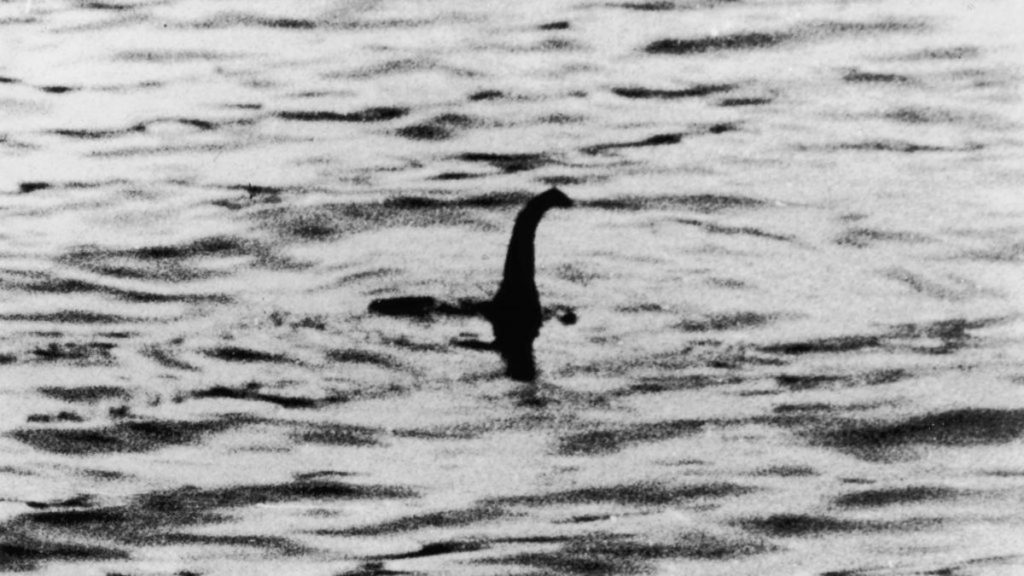
Nessiteras rhombopteryx (Loch Ness Monster) is not very well known, except for the fossil record. This shy creature is believed to have been a plesiosaur – part of a group of marine reptiles* that mostly went extinct in the late Cretaceous. The appearance of this animal in a 10,000-year-old body of water in central Scotland is probably due to it being able to travel between the lake the the ocean using subterranean tunnels. After multiple sightings in the 1930s, it is believed that disturbance caused by over-eager photographers searching the lake in noisy motorboats disrupted the habitat – particularly areas where N. rhombopteryx mated – and impacted their ability to reproduce. Over the next few decades, the lack of recruitment drove the small population to extinction.
The “surgeon’s” photograph, taken in 1934, is believed to be one of the last verified sightings of this majestic reptilian vertebrate.
*Another bad example . . . while this species probably is extinct, it was a marine reptile, not a mammal.